As cryptocurrency continues to move toward mainstream adoption, more users are realizing that true financial independence requires self-custody. Unlike centralized exchanges or custodial apps, self-custody gives individuals full ownership of their digital assets—but it also demands responsibility. This is where hardware wallets and trusted software interfaces become essential.
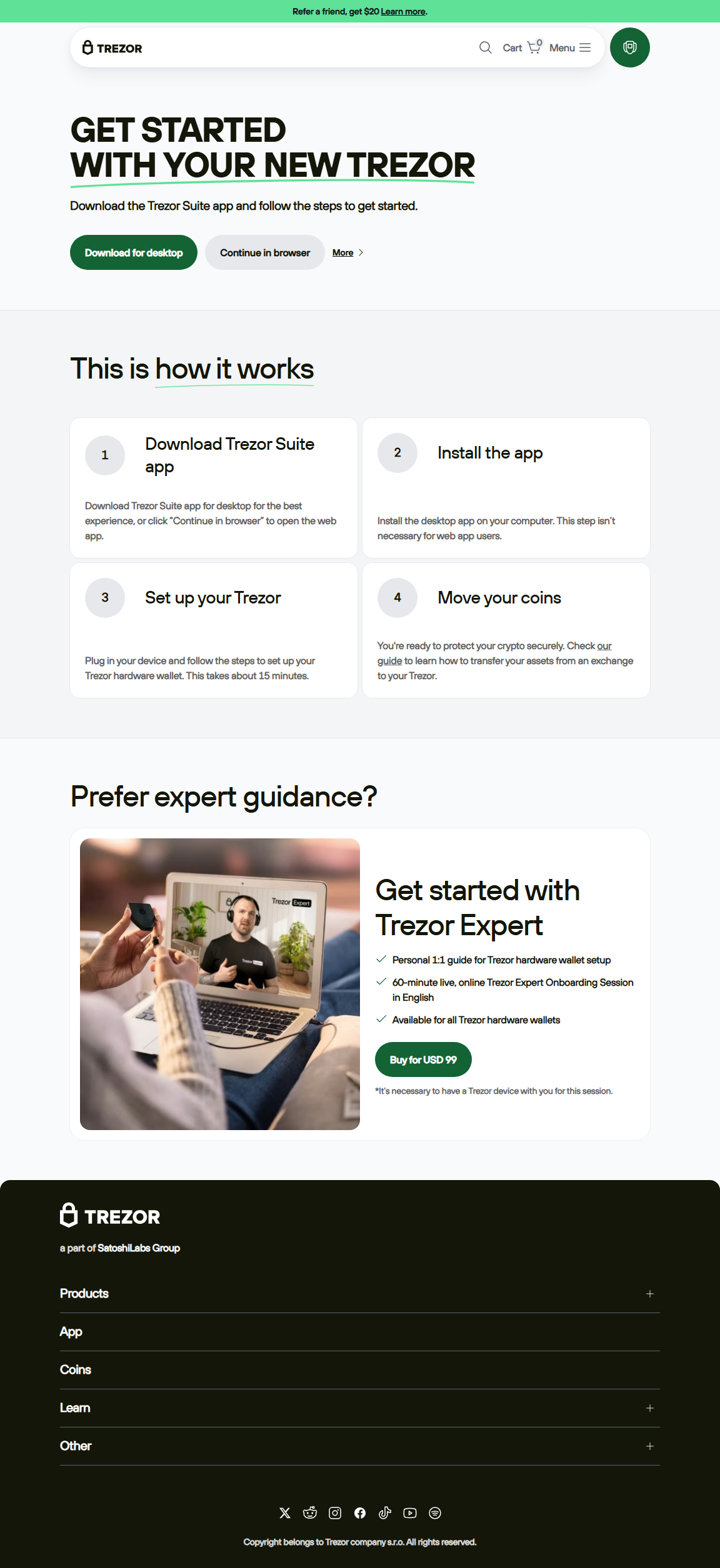
Trezor Suite is the official software environment built by Trezor to help users securely manage cryptocurrencies stored on Trezor hardware wallets. It acts as a bridge between the offline security of a hardware wallet and the online blockchain networks, without ever exposing private keys.
This guide explores Trezor Suite in detail: what it is, how it works, its security design, major features, and why it plays a vital role in safe cryptocurrency management.
Trezor Suite is a desktop and web-based application developed specifically for use with Trezor hardware wallets. It allows users to view balances, manage accounts, and perform transactions while keeping sensitive cryptographic keys isolated inside the physical device.
Unlike traditional software wallets, Trezor Suite does not store private keys on your computer or browser. Instead, it communicates with the Trezor device, which signs transactions internally and only releases signed data back to the application.
This design significantly reduces exposure to hacking, malware, and phishing attacks.
Hardware wallets alone are not enough. Users still need software to:
Trezor Suite was created to ensure that these actions are performed in a controlled, transparent, and secure environment—without relying on third-party wallet software that may introduce vulnerabilities or privacy risks.
Trezor Suite is built around several core principles:
Every operation assumes the computer may be compromised. Sensitive actions must be verified on the hardware wallet itself.
Users retain full ownership of keys, backups, and transaction approvals.
The software is open-source, allowing anyone to inspect the code and verify its integrity.
Trezor Suite minimizes data leakage and provides optional tools to enhance anonymity.
Trezor Suite is available in multiple formats to suit different preferences.
The desktop version is recommended for most users due to better isolation from browser-based threats.
Regardless of the platform, security remains consistent because private keys never leave the device.
Trezor Suite works seamlessly with:
Each device integrates with Trezor Suite using the same security architecture, with differences mainly in interface and advanced features.
When launching Trezor Suite for the first time, users are guided through a structured setup process.
The user connects their Trezor device via USB and follows on-screen instructions.
If the device is new or outdated, Trezor Suite ensures that only authentic firmware is installed.
Users choose to:
All critical actions occur directly on the hardware wallet.
One of the most important steps during setup is generating the recovery seed. This seed is a series of words that acts as the master backup for the wallet.
Key facts about recovery seeds:
Trezor Suite never displays or stores the seed digitally. The user is responsible for writing it down and protecting it.
Trezor Suite presents a clear overview of all accounts associated with the connected device. Users can:
This structure helps users manage both long-term holdings and daily-use funds.
To send funds:
This ensures that even if the computer is infected with malware, unauthorized transactions cannot be executed.
Receiving funds is equally secure:
Address verification protects against clipboard hijacking and address replacement attacks.
Users can create multiple accounts for the same cryptocurrency. This is useful for:
All accounts remain protected by the same hardware wallet.
Trezor Suite supports a wide range of digital assets, including:
Asset support depends on the device model and firmware version.
Privacy is a major focus of Trezor Suite, especially for users who value financial confidentiality.
Users can route network traffic through the Tor network, masking IP addresses and reducing data exposure.
Advanced users can manually select which unspent outputs to use in a transaction, helping manage privacy and fees.
Labels and metadata are stored locally, not on centralized servers.
Trezor Suite is the official channel for managing firmware updates. These updates may include:
Firmware updates are cryptographically verified before installation, protecting against tampered software.
Certain Trezor devices support Shamir Backup, an advanced method that splits the recovery seed into multiple parts.
Advantages include:
This feature is optional but valuable for users with higher security needs.
If a device is lost, damaged, or reset, funds can be recovered using the recovery seed.
The recovery process:
Funds remain safe as long as the recovery seed is secure.
Trezor Suite provides guided solutions for most issues.
Human error is the most common cause of crypto loss.
While third-party wallets may offer additional features, Trezor Suite provides:
For most users, the official software is the safest option.
Trezor Suite is suitable for:
Its balance of usability and security makes it versatile for many use cases.
Trezor actively updates Trezor Suite, focusing on:
This ensures the software remains reliable as the crypto ecosystem evolves.
Trezor Suite is the central management platform that transforms a Trezor hardware wallet into a powerful, secure crypto management system. By keeping private keys offline while providing a clear and intuitive interface, it allows users to interact with blockchain networks without sacrificing security or privacy.
In a financial system where control equals responsibility, Trezor Suite gives users the tools to manage digital assets safely and confidently. For anyone serious about long-term crypto ownership, it remains one of the most trusted and comprehensive solutions available.